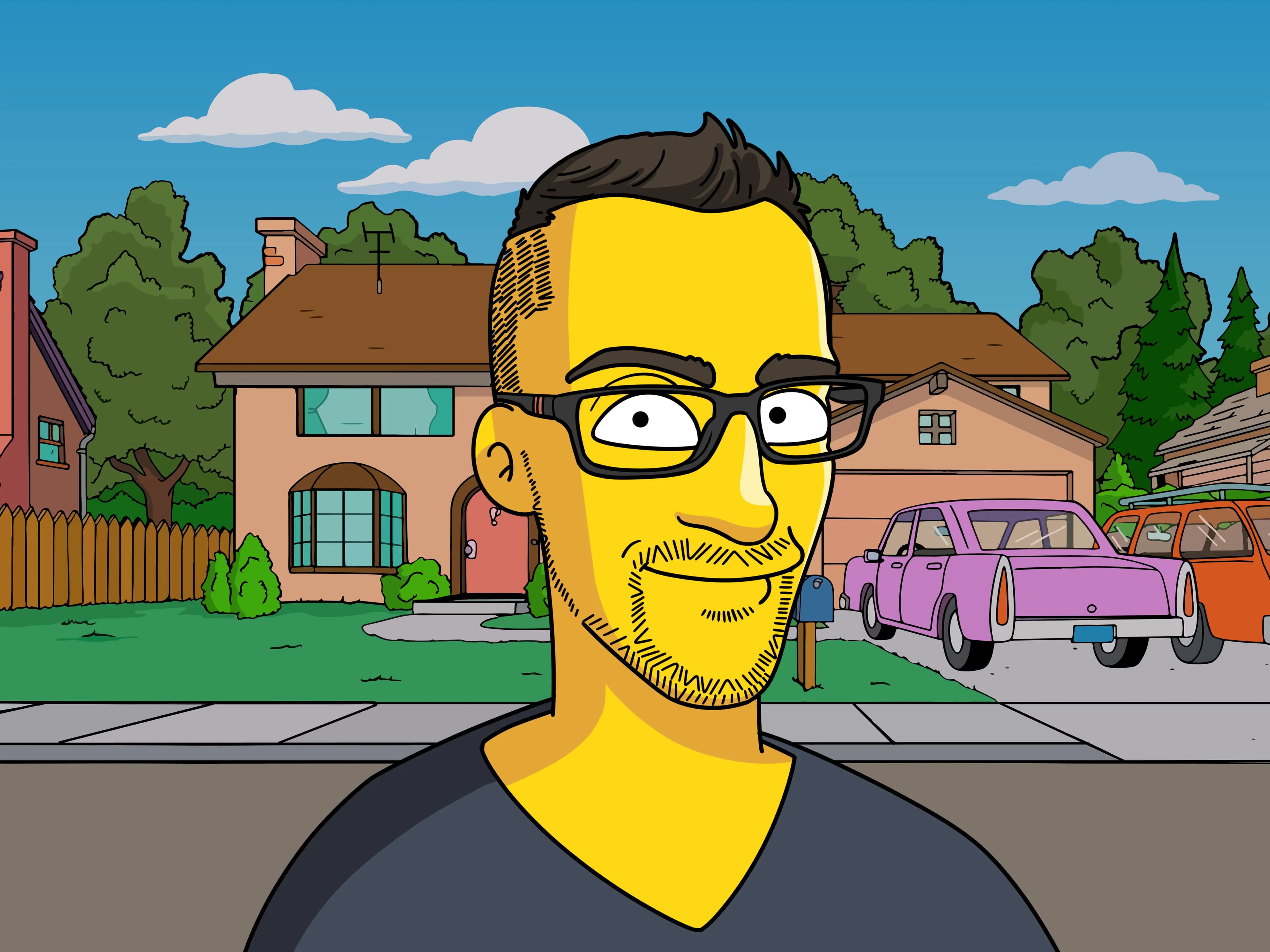

Drawing an Original Portrait in Cartoon Style
Drawing an original portrait, taking up cartoon characteristics, requires the illustrator to do real synthesis work. Here, the main details of the represented person's face must be simplified in their forms.
That's good, since as human beings, we all have this ability to synthesize the complex details of an object to reproduce them in their most basic form. However, we're not all talented illustrators, and a learning phase is therefore necessary to achieve a successful and well-identifiable portrait.
Let's look together at the basics of cartoon drawing to produce an original portrait that's funny from a real person's face.
The 6 Steps to Draw an Original Portrait in Cartoon Style
To draw an original portrait in cartoon style, you'll need to limit the number of details in your work, trying to keep only the basic shapes of your model's face. The nose, ears, and even hair… Will thus be considerably simplified.
Therefore, make sure to respect the three golden rules of cartoon drawing:
- simplify details;
- round shapes;
- exaggerate expressions.
Precepts that should however never make you forget your model. Thus, simplifying the person's features doesn't mean they should be completely erased. An original portrait is nothing more than the drawing of a stranger if it doesn't strive to represent the most obvious characteristics of the face that inspired it.
Draw a Circle, Base of Any Original Portrait
The circle is the basic shape of cartoon. We use it from the very beginning of the portrait, to define the basic proportions of the head of the person to represent.
- So start by tracing a circle on your sheet of paper.
- Once done, trace the face axes using a vertical line crossed at the center of a horizontal line.
Note: depending on the face's orientation, the lines that form its axis can cross at different locations of the circle.
Draw the Jaw in Continuation of the Skull
The success of an original portrait in cartoon style mainly relies on the face structure, composed of the skull and jaw, as well as the character's eyes.
Now attack the protagonist's jaw shape. In a first phase, shape it from a simple geometric form that integrates into the continuation of the circle symbolizing the skull.
Then take the time to form the character's chin, trying to respect your model's lines (strong chin, receding, round, square, etc.)
Represent Large Oval Eyes
The gaze obviously has capital importance when drawing someone's face.
For an original portrait that takes up cartoon codes, your protagonist's eyes must be drawn from an oval shape.
Respect here a space the size of an eye between your character's two eyes. This is a basic rule of portraiture, which applies even if your drawing aims to be closer to cartoon than reality.
However, in a portrait that takes up cartoon stylistic codes, eyes always have dimensions superior to those of the original subject.
TIPS
- Never forget to insert a point of light in the character's pupils, otherwise their gaze seems blind.
- To accentuate the portrait's cute aspect, you can direct the pupils toward the inside of the eye, as if the character were cross-eyed. This is a method often used by caricaturists.
- To give life to the character's gaze, you can also represent the eyes' "wrinkles" using a simple line placed below them.
Unlike realistic portraiture, eyebrows are only represented here once the eyes are finished. Their position, as well as their shape, will notably allow you to play with your character's expressions. In a concern for resemblance, however, make sure to respect your model's eyebrow density (bushy, thick, thin, etc.)
Sketch a Thin and Undetailed Nose
In an original portrait in cartoon style, it's customary not to dwell too much on nose details. It's even common to draw only its tip, that is, the nostrils.
Similarly, cartoon illustrators often tend to draw only one side of the nose, the one that opposes the light. Thus, where a "real" nose is composed of several cartilages, its form is considerably simplified in its cartoon version.
However, if your model has a character nose (prominent, hooked, trumpet-shaped, broken, etc.) you'll need to take the time to represent it convincingly, but with only a few precise strokes. Without this, the drawing's resemblance will necessarily suffer.
Form a Very Simple Mouth
Here again, the mouth must offer simple lines. When the original portrait object is a man or child, we're even content with a simple line. Thus, lips are generally not drawn in cartoons.
Draw the Hair Outline
In cartoons, hair often helps define the represented character's personality.
Depending on their implantation, they're capable of expressing the protagonist's age, but also their character (rebellious, conservative, etc.)
To draw those of your original portrait, place your model's photo next to your drawing board and reproduce the overall shape of their hair, without dwelling on the detail of each hair.
Focus on Female Face Specificities
Women's faces are generally more delicate than men's. In cartoons, they're therefore generally endowed with:
- thin eyebrows;
- larger and more expressive eyelashes than male characters;
- a slightly more plump mouth;
- a chin that's also thinner;
- a small nose very little detailed;
- long hair.
Be careful however not to lose your model along the way! If your drawing's goal is to produce an original portrait, it must still resemble its model. Also, even if the represented character is a woman, stay faithful to the characteristics of her different features. For example, don't draw her thin eyebrows if hers are very bushy, under the pretext of sticking to cartoon's basic precepts.
An Original and Very Expressive Portrait
Cartoon allows easily representing face expressions, as well as your original portrait model's emotions.
It's thus possible to completely transform the face thanks to a few simple elements.
Some examples:
- slightly tilt the character's mouth corner downward and their expression becomes sulky.
- Draw an eyebrow slightly lower compared to the other and your model takes a skeptical air.
- Move the pupils upward and the character seems to roll their eyes.
- Etc.
You can thus modulate the character's expressions infinitely, without ever touching the face's bases which always remain the same. A very practical technique for representing the character of the person whose portrait you're creating.
An Original Portrait with Details on the Model's Personality
To accentuate your portrait's resemblance to its model, strive to reproduce the small details that characterize them, such as:
- a tattoo;
- a beauty mark;
- a dimple;
- a scar;
- etc.
Similarly, add accessories among those most often worn by your model, such as:
- earrings;
- glasses;
- a hat;
- etc.
Thus, if the face features are largely simplified to obtain an original portrait in cartoon style, don't skimp however on the small personal details that will greatly help identify your model.
Conclusion
In summary, to draw an original portrait in cartoon style:
- trace a circle to represent the subject's skull;
- specify the direction of their gaze from guide lines;
- draw the eyes' outline from an oval shape;
- sketch eyebrows faithful to the model's;
- extend the face with an appropriate jaw shape corresponding to the subject's;
- simplify the mouth, nose, and ears' shape;
- trace the hair outline without obsessing over representing each hair;
- add the small striking details of your model's face.
Rome wasn't built in a day! You'll therefore need time to achieve a result that suits you.
If you're in a hurry, expose your project in detail on the Cartoonely platform! A professional illustrator will take charge of creating your original portrait as a custom cartoon portrait. The work will thus form a perfect gift for a loved one!