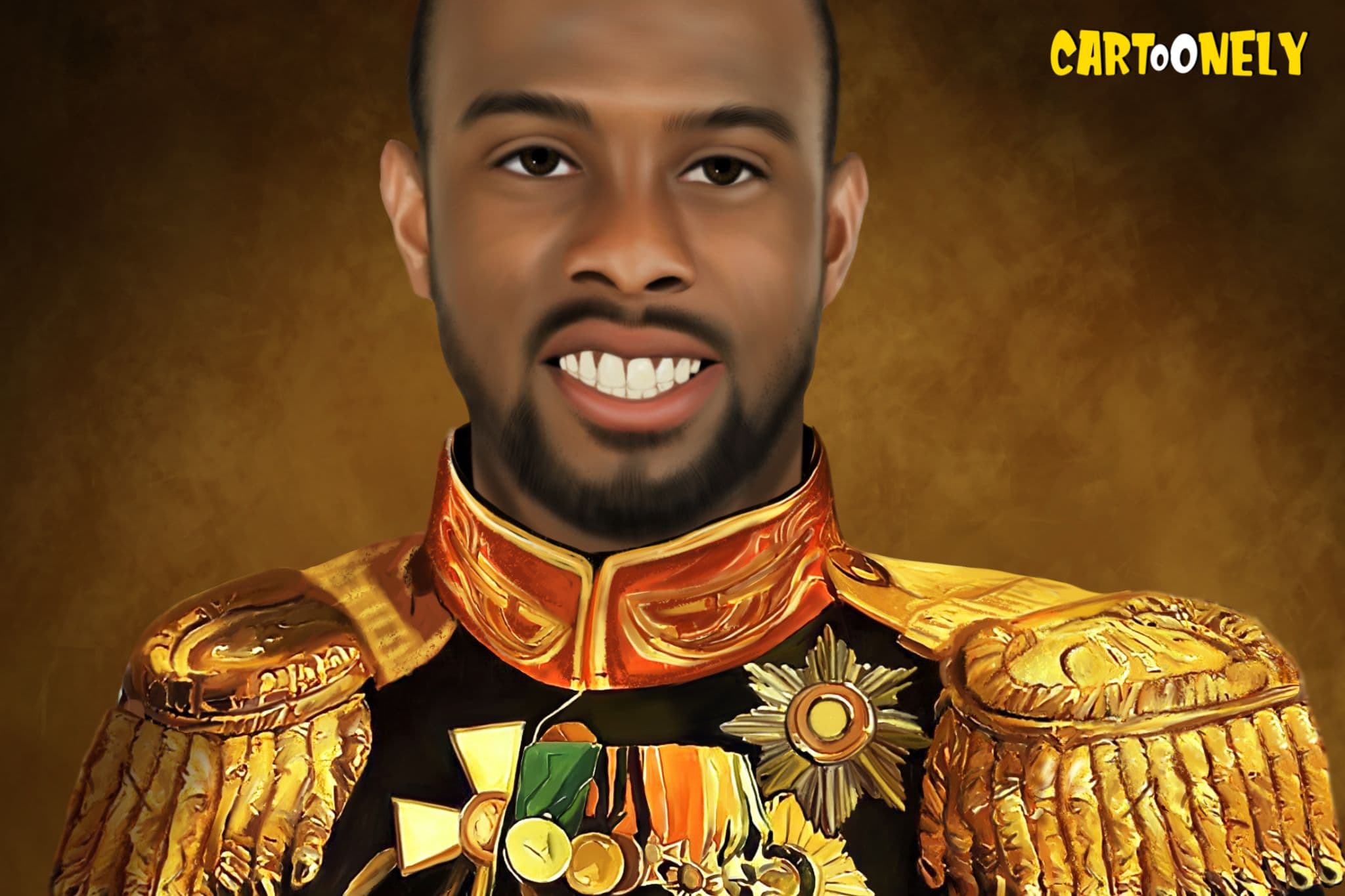

How to Draw a Man's Portrait?
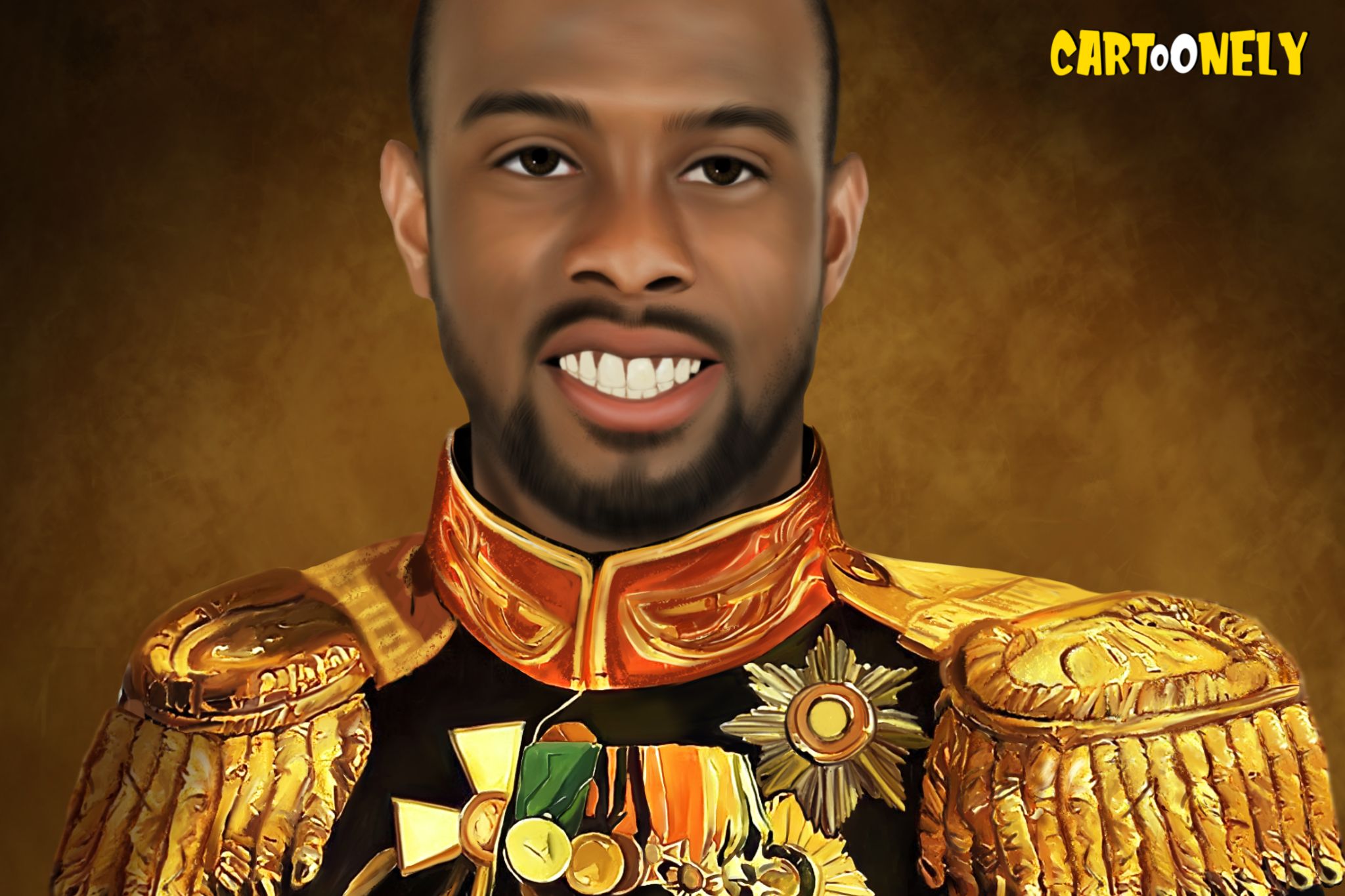
Drawing a man's portrait isn't innate, but good advice will help you. Learning the basic techniques of portraiture will quickly help you get a satisfying result. With practice, your male drawings will become more and more accomplished, and you'll even enjoy exploring new expressions.
Techniques and tips, here's how to make a man's portrait drawing!
Drawing a Male Portrait: The Basic Shapes
As humans, most of the basic proportions of the face are the same for men and women. Among these many similarities are the positions of the eyes, nose, mouth, and ears (whether the face is shown from the front or in profile). So, the basic techniques of portraiture are the same regardless of the subject's gender.
To draw a man's portrait, start by sketching the structure of his face using simple geometric shapes.
Draw a First Circle
To start, draw a circle freehand. Don't worry about it—even if your circle is a bit irregular, it won't show once the drawing is finished.
Divide the Circle Horizontally
Next, draw a straight line across the circle to split it into two equal parts.
Divide the Circle Vertically
Now draw a second line, this time vertically. Extend your line downward until it's the height of one and a half circles.
Connect the Circle and the Bottom of the Vertical Line
By connecting the initial circle to the bottom of the vertical line, you'll form the schematic structure of your man's portrait drawing. For now, just sketch the jawline with simple lines.
Drawing a Man's Portrait: The Face Elements
Now that the basic structure of your male portrait is ready, it's time to place the face elements.
Redraw the jaw and chin contours. Note that male faces are often more pronounced than female faces. So, don't hesitate to bring out the jaw shape, as well as the cheekbones or chin. Overall, the lines of a male face are more angular than those of female portraits, and the chin is wider. However, be careful not to exaggerate these features too much, or you'll end up with an ugly man's portrait drawing.
Next, schematically place the face elements:
- the eyes should be placed below your horizontal line, to reserve the upper part of the circle (the skull, really) for the hairline. A common beginner's mistake is to place the eyes too high, even on the character's forehead.
- Position the nose so that the nostrils are on the lower edge of the circle (first shown as a small v).
- The mouth goes below the nose.
Once done, you can erase your guide lines.
Tip: divide your face with three new vertical lines at equal distances. Well-proportioned eyes cover the area between vertical lines 1 and 3.
Man's Portrait: Drawing the Face Details
To stylize your male portrait, you'll want to accentuate or reduce certain characteristic features of your character.
Face elements that can be accentuated:
- the length and shape of the nose;
- the distance between the nose and mouth;
- the thickness and length of the chin;
- the shape of the jaw;
- the thickness and height of the eyebrows.
Face elements that can be reduced:
- the size of the eyes;
- the thickness of the mouth
The Eyes
Before you start, remember that absolutely symmetrical faces don't exist! So your eyes don't need to be perfectly identical.
The Shape of the Eyes
The shape of the eyes greatly impacts the look of a face. In men, the eye is often more sunken into its socket than in women. By extension, the brow ridge is also more prominent (especially noticeable in profile and 3/4 portraits). As a result, the eyes are set further inward than in women.
The Iris and Pupil
The iris is placed against the upper line of the eye. The pupil is then positioned in the center of the iris. The iris has a complex texture and is made up of many colors. This texture and complexity can be shown with fine lines of different lengths and thicknesses, always radiating from the pupil to the edge of the iris. Finally, the gaze comes to life by adding a highlight—a light spot that can be a simple white dot, several dots, or even a small white window in the iris.
Eyelids and Circles
Those new to man's portrait drawing often forget to draw the upper eyelid and the lower eye circle. Remember to add them as simple fine lines, so as not to age the look too much.
Eyelashes
Finally, an eye is, of course, made up of eyelashes. Note that to reinforce the masculine character of the portrait, these are generally fuller here than in a female portrait.
Eyebrows
In a man's portrait drawing, the eyebrows are closer to the eyes than in a female portrait. They're also thicker. Also, where female eyebrows usually start in line with the nostrils, male eyebrows start at the edge of the nose bridge.
To draw them, outline their shape before filling them in with a series of quick strokes. Start filling from the inside of the eyebrow and move outward.
The Mouth
In a man's portrait drawing, the lips are generally thinner, or at least less prominent than in women. So, you rarely draw the shape of the lips here, or you'll feminize the mouth with lips that are too plump.
However, don't forget to mark the outer corners of the mouth by drawing small creases with simple lines. Also, draw the chin crease with a line just below the lower lip. This gives a bit of volume to the mouth and helps define the chin more.
The Nose
A man's nose is also often more pronounced than a woman's. In a male portrait, you can lengthen it, or make it very short. You can also widen it and give it different shapes depending on the effect you want.
So, drawing a broken or very hooked nose is much less of a problem on a man than on a woman. Also, by moving the mouth away from the nose (by lowering it slightly), you'll give the face a more masculine look.
The Ears
For the ears, know that their size generally matches the area between the eyes and the nostrils.
In a front-facing male portrait, they're not drawn round, but almost flat. To draw them, make two rectangles rounded at the ends and stuck to the skull.
The Neck
Again, a man's neck is much thicker than a woman's. Especially in adults, since that of teenagers and young boys is about the same as girls. In an adult man, the neck is about as wide as the face. Don't forget to draw the Adam's apple, which can be more or less prominent.
Hair and Beard
To draw the male character's hair, start by roughly sketching the outer contours of the hair on the top of the skull. Then place the hair part in line with your vertical guide line (see step 1). You can also choose to offset it to the side to give the hair some movement.
To draw the hair, always start from the top of the skull and let it fall toward the ears on both sides of the head. The length varies depending on the hairstyle you want. You don't need to detail every hair. A few locks are enough.
Finally, think about the character's beard. Even if he's clean-shaven, you can add sideburns in front of the ears, which further reinforces his masculine look.
Conclusion
Regular practice is still the best way to master man's portrait drawing.
With enough practice, you'll soon be ready to try bolder male portraits in various poses (3/4, profile, from below…)
Mastery takes a bit of time, though. So, if you want to give a drawn portrait to a man you care about, don't hesitate to share your project on the Cartoonely platform. A talented artist can then take care of your portrait and create a memorable gift.